When my Editor asked if I’d be up for trying a Hertility hormone test, my immediate answer was yes. Not because I’m planning on having children right now, but because I’ve always been curious about my hormonal health, long before any thoughts of timelines or family planning ever entered the picture. Hertility is an at-home hormone and fertility testing service that helps women understand what’s really going on inside their bodies
As a former ballerina and childhood athlete, my cycle was irregular for years. I’ve experienced painful periods, months where things felt “off,” and times when I wondered whether my hormones were truly in balance or just coping with the intensity of my lifestyle. It’s strange how often we focus on how our bodies look from the outside, without having any real idea of what’s happening on the inside.
So when the chance came to actually look under the hood, I took it.
I also decided to document the whole thing in a three-part video series, partly for accountability, partly because I know how many women are quietly wondering the same things I was.
Getting the kit – and the wait for Day 3
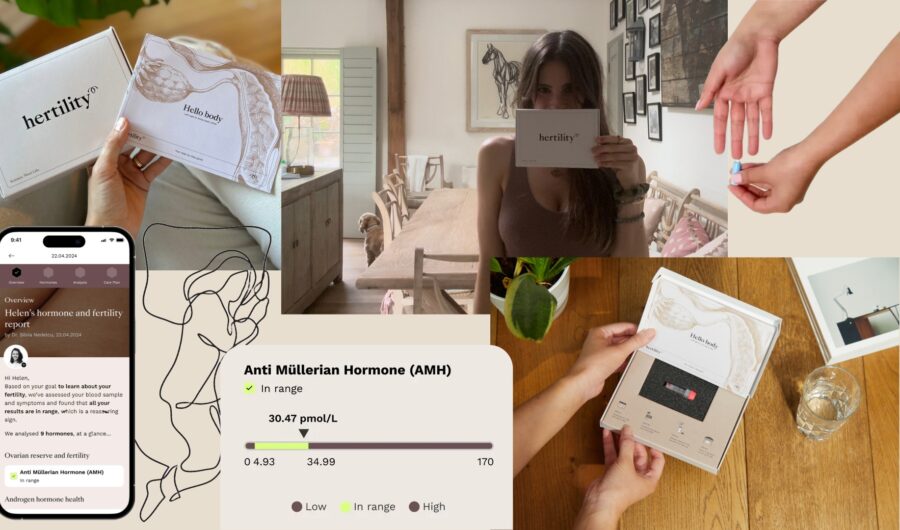
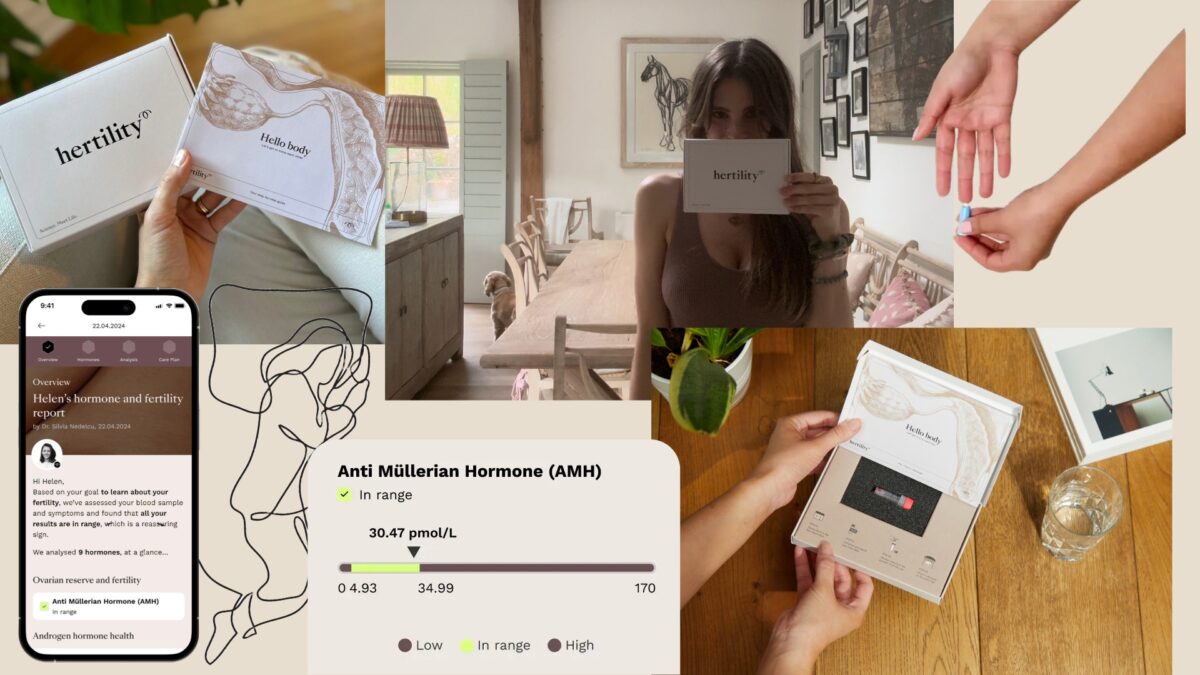
The kit arrived quickly and felt thoughtfully designed: modern, feminine, clear. What surprised me was how specific the timing needed to be. You take the blood test on Day 3 of your cycle, so for a moment I just had to wait. This is because Day 3 is when key hormones like FSH, LH, oestradiol and others are at baseline levels, giving the clearest picture of ovarian function and overall hormonal balance. It sounds small, but it created a sense of anticipation: this wasn’t just me “taking a test,” it felt like tuning into my body.
I was excited, but also a little bit nervous. There’s something vulnerable about choosing to know more about yourself. You can’t help but wonder: what if something’s wrong? What if my timeline looks different from what I’d hoped? But curiosity won.
Doing the test at home
When Day 3 arrived, I set myself up at home, read through the instructions (which were genuinely easy), and did the finger-prick blood test. I didn’t exactly enjoy it, I don’t think anyone loves squeezing their own fingertips until blood appears – but it was doable. More than anything, it felt empowering. Like: I can actually do this. I can be curious about my body rather than afraid of it.
I posted my second video, dropped the sample off, and waited.
The results – and the relief
When the email came through saying my results were ready, I genuinely paused before opening it. I think almost every woman understands that tiny moment of fear.
But everything came back perfectly normal. My hormones were balanced, and my fertility markers were exactly where they should be. I was relieved. The results were reassuring, grounding, and gave me some clarity around my painful periods.
Why I’d recommend it to any woman in her twenties
I didn’t take this test because I want a baby tomorrow, I took it because I wanted perspective. I wanted to know how I should plan for when I do want to be able to conceive, and whether the timeline in my mind is realistic with the timeline of my body. There’s something incredibly calming about knowing where you stand: about understanding your hormones, your cycle, and your fertility long before you’re forced to make decisions around them.
For me, the biggest gift was peace of mind.
Not because everything was perfect (though that was lovely), but because I finally felt connected to what’s happening inside my body instead of guessing. I know now that I don’t have to rush. I know what my painful periods likely mean, and don’t mean. And I know what markers I’d want to keep an eye on years from now.
It’s information, not pressure. And honestly, in a world where women’s health is so often treated reactively rather than preventatively, that feels like a small revolution.
Words by Saskia Gregson-Williams
SHARE THIS STORY