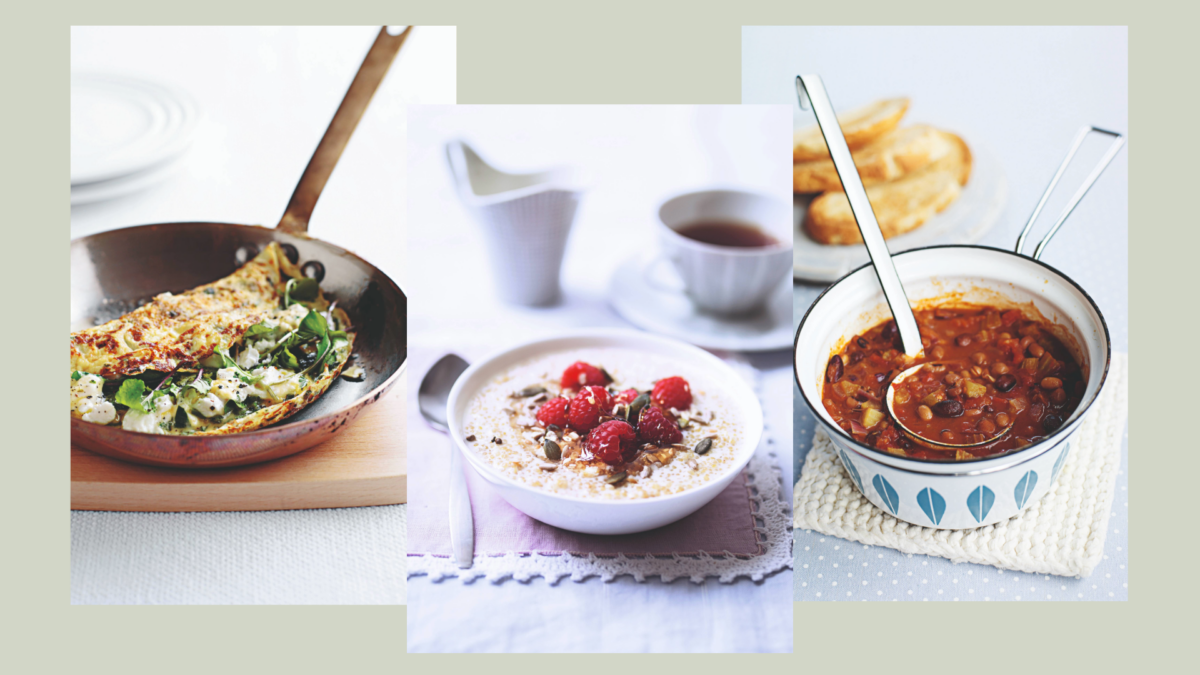
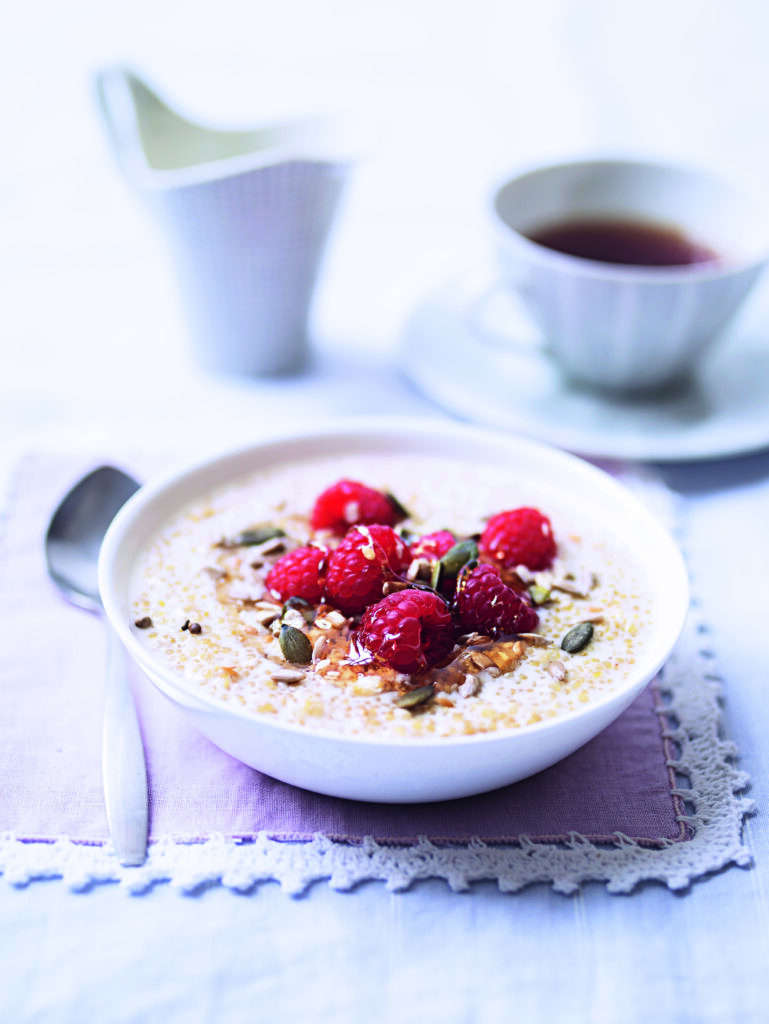
Quinoa Porridge with Raspberries
Your gut microbiome loves variety and a healthy, diverse gut microbiome is not only associated with good cardio-metabolic health, it also plays a role in regulating your mood and energy levels. All of these are key considerations when it comes to eating for PCOS and reducing risk factors. Mixing up your wholegrains, such as swapping oats for quinoa, is a great way to increase plant diversity and nourish your gut microbiome.
SERVES 2
600 ml (1 pint) milk
100 g (3½ oz) quinoa
½ teaspoon ground cinnamon
125 g (4 oz) fresh raspberries
2 tablespoons mixed seeds (pumpkin, hemp, sunflower, sesame, linseed)
1 tablespoon clear honey
Method
1. Bring the milk to the boil in a small saucepan. Add the quinoa and return the mixture to the boil, then reduce the heat to low, cover and simmer for about 15 minutes until three-quarters of the milk has been absorbed.
2. Stir the cinnamon into the pan, re-cover and cook for 8–10 minutes, or until almost all the milk has been absorbed and the quinoa is tender.
3. Spoon the porridge into 2 bowls, then top with the raspberries, sprinkle over the seeds and drizzle with the honey. Serve immediately.
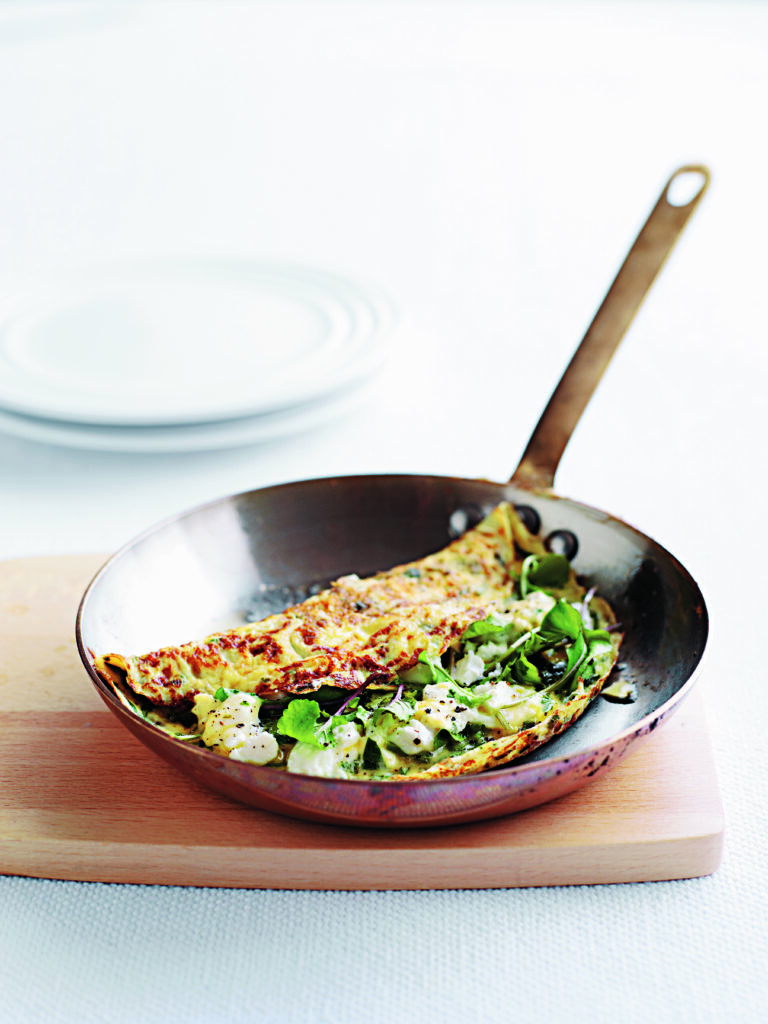
Rocket & Goats’ Cheese Omelette
This herby, green omelette will set you up perfectly for the day ahead. It doesn’t take long to make, but the high protein content will keep you satiated and prevent dips later on, helping you take on whatever the day throws at you.
SERVES 4
12 eggs
4 tablespoons milk
4 tablespoons chopped mixed herbs, such as chervil, chives, marjoram, parsley and tarragon
2 tablespoons olive oil
125 g (4 oz) soft goats’ cheese, diced small handful of baby rocket leaves
salt and pepper
Method
1. Beat the eggs, milk and herbs together in a large bowl along with some salt and pepper.
2. Heat the olive oil in an omelette pan, then swirl in a quarter of the egg mixture. Cook over a medium heat, forking over the omelette so that it cooks evenly.
3. As soon as the omelette is set on the underside, but still a little runny in the centre, scatter a quarter of the cheese and a quarter of the rocket leaves over one half of the omelette. Carefully slide the omelette on to a warmed serving plate, folding it in half as you go. For the best results, serve immediately.
4. Repeat to make 3 more omelettes and serve each individually. Alternatively, keep warm in a moderate oven and serve together.
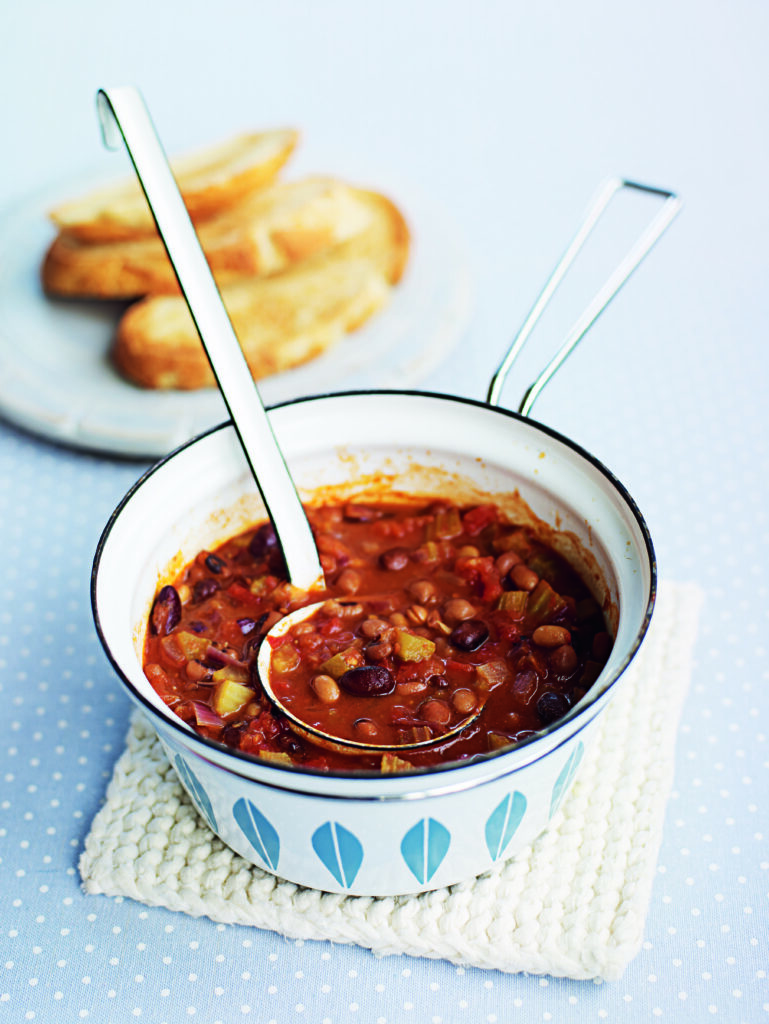
Boston Baked Beans
Beans are a great PCOS staple due to their fibre content. Because of all the fibre, the sugars in the beans are digested more slowly, creating a sustainable release of energy. Instead of grabbing a can of baked beans from the supermarket, spend a little longer in the kitchen and make your own!
SERVES 4
2 tablespoons olive oil
1 large red onion, finely chopped
4 celery sticks, finely chopped
2 garlic cloves, crushed
400 g (13 oz) can chopped tomatoes
300 ml (½ pint) vegetable stock
2 tablespoons dark soy sauce
4 teaspoons Dijon mustard
2 x 410 g (13½ oz) cans mixed beans, drained and rinsed
4 tablespoons chopped flat leaf parsley toasted sourdough, to serve
Method
1. Heat the oil in a heavy-based saucepan. Add the onion and cook over a low heat for 5 minutes, or until softened. Add the celery and garlic and continue to cook for 1–2 minutes.
2. Add the tomatoes, stock and soy sauce and bring to the boil, then reduce the heat to a fast simmer and cook for about 15 minutes, or until the sauce begins to thicken.
3. Add the mustard and mixed beans and cook for a further 5 minutes, or until the beans are heated through. Stir in the chopped parsley and serve on toast.

Taken from: The PCOS Recipe Book by Megan Hallett. Published by Hamlyn.
Photography: Lis Parsons – omelette; William Shaw – porridge, beans
SHARE THIS STORY